Herzberg’s Motivation-Hygiene Theory
Many managers mistakenly think that employee satisfaction can increase employee motivation. American psychologist Frederick Herzberg’s Motivation-Hygiene Theory proposes that people are influenced by two factors: those that impact motivation and basic factors that influence job satisfaction. Motivation factors include challenging work, recognition, and responsibility. Hygiene factors consist of pay and benefits, supervision, working conditions, and job security (among others).
Hygiene factors determine a person’s level of satisfaction with their job and strongly influence employee retention. If they are not met, they lead to job dissatisfaction and cause employees to look for better opportunities elsewhere. However, the addition of more or better hygiene factors over a certain baseline will not increase job satisfaction or performance.
Motivation factors influence how a person performs on the job. When an employee is motivated, they invest more of themselves in their work and strive to do better. Merely being satisfied does not cause an employee to work harder. Additionally, an employee can be highly motivated but not satisfied with the job. They might find the work interesting and challenging, but if they worry too much about job security or think they can be paid more at a different company, they will not be satisfied.
Both factors are key components of employee engagement. Basic hygiene factors must be met to ensure employee satisfaction and retention. An employee must also feel motivated in order to perform at a high level. Hygiene factors are easier to identify and improve. Specific motivation factors differ for each employee and are most influenced by the employee’s supervisor. The manager needs to understand what drives each of his or her employees and create the circumstances for them to perform at their best.
Job Satisfaction
Do you try to increase performance by focusing too much on job satisfaction? What are some of the best motivators for your employees?
Managers want to fulfill their employee’s needs so that they are content with their pay, hours, and level of flexibility. These factors influence employee satisfaction. But how does satisfaction influence employee engagement?
Consider Connie. She is an assembly line employee who is satisfied with her job. Her job means steady employment. She feels satisfied with her pay (at least it’s better than most of the jobs she could find in the area). She starts at 7:00 in the morning and gets off in time to pick up her seven-year-old from school. It meets her needs. However, for Connie, it’s just a job. She can’t say she looks forward to coming to work, and she doesn’t find herself motivated to perform her best.
Employee Satisfaction vs. Employee Engagement
An employee can be satisfied with a job without being engaged in the job. Employee engagement is much more than being content with pay and the ability to leave at 3 pm. That contentedness is merely job satisfaction, and though satisfaction is generally enough to retain employees, it’s not enough to ensure productivity. On the other hand, employee engagement does promote increased productivity.
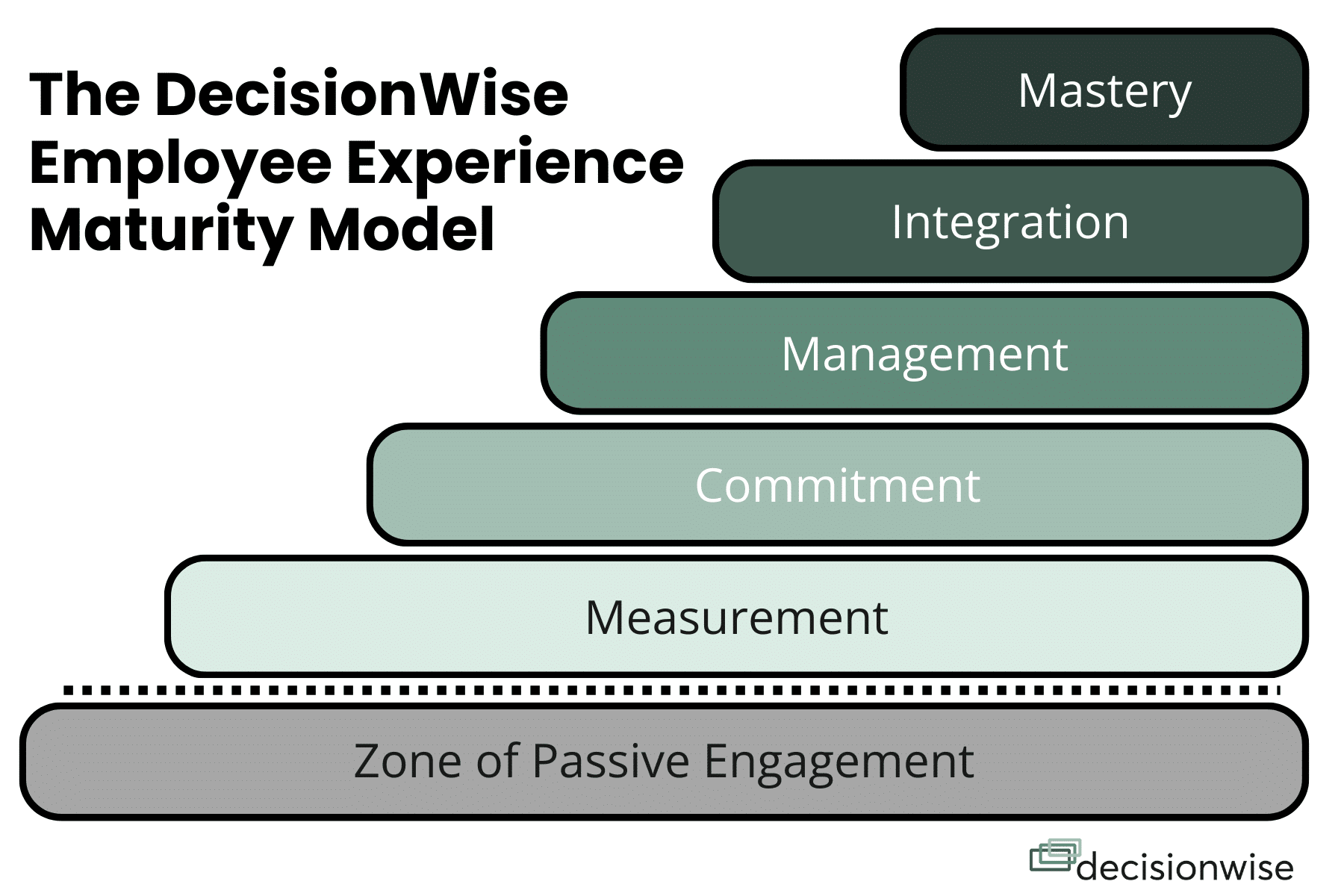
An engaged employee is an employee who is deeply involved and invested in their work. The factors that drive employee engagement, however, are different than those that drive satisfaction. Engagement factors include Meaning, Autonomy, Growth, Impact, and Connection (MAGIC) Employee satisfaction is the foundation upon which employee engagement can grow and thrive.
Organizations with genuinely engaged employees have higher retention, productivity, customer satisfaction, innovation, and quality. They also require less training time, experience less illness, and have fewer accidents.
Employee satisfaction is the minimum entry fee that needs to be met in order for an employee to be fully engaged.